What is component derating analysis?
Component derating analysis defines the optimal operating range for each component — below the manufacturer’s maximum rating for current, voltage, power and temperature, and below the stricter derating guidelines set to increase product robustness.
The maximum rating for applied component stress (current, voltage, power, temperature, etc.) is defined by the manufacturer, and even stricter derating guidelines are defined to increase product robustness. Component derating analysis defines the optimal operating range for each component.
Why do you need component derating analysis?
Because electrical overstress is the leading cause of field returns: a component subjected to power, current, voltage or temperature beyond its maximum rating can be damaged, and performance deteriorates further as temperature rises — so the common habit of picking a part rated at twice the expected stress stops being a sufficient margin.
Component damage may occur when it is subjected to power, current, voltage, or temperature which surpasses its maximum stress rating.Electrical overstress affects product performance and is the leading cause of field returns.
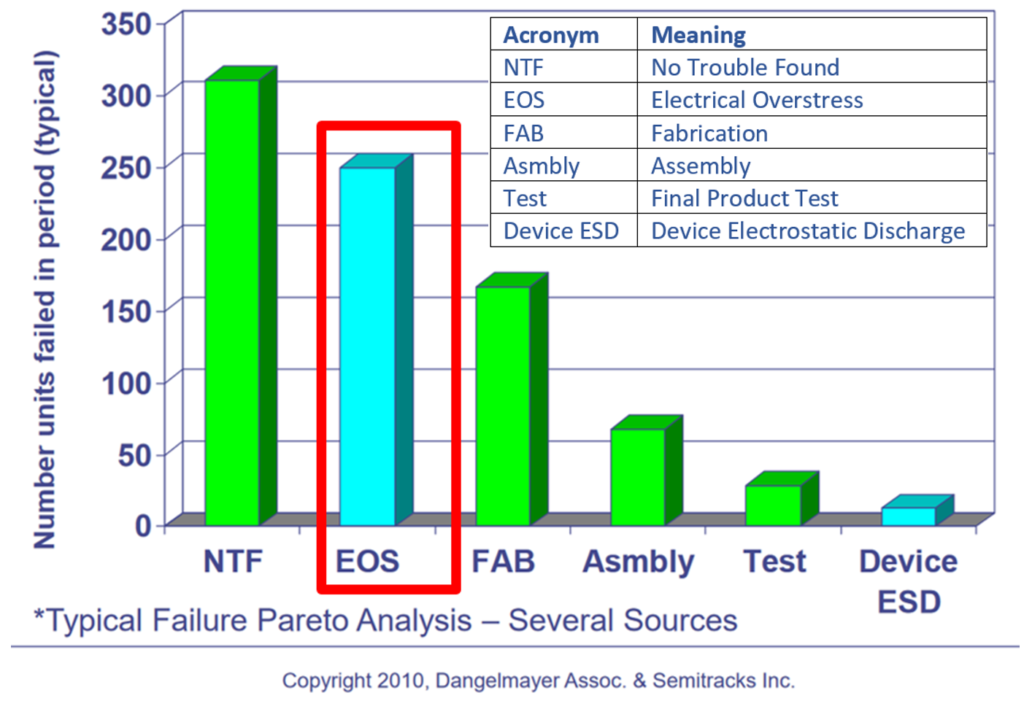
Many engineers select components that have a maximal rating which is twice the expected actual stress. However, as temperatures increase, component performance deteriorates, this practice becomes insufficient, and derating guidelines must be applied.
Component derating analysis helps you select the optimal component rating according to stress load and temperature.
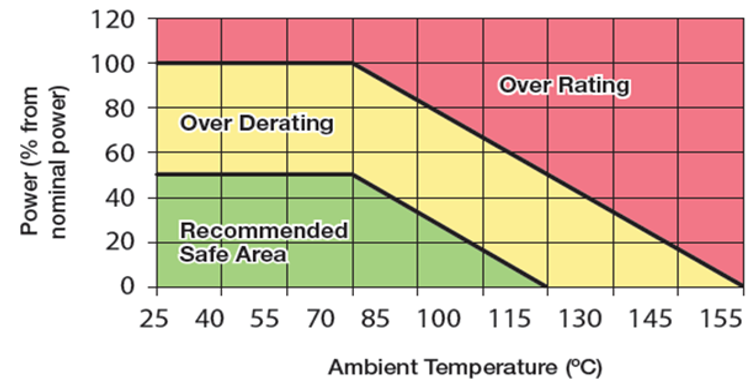
The analysis detects over-rating (red) and over-derating (yellow) components. Over-designed components are also detected when stress is much lower than the rating.In many companies, the process is performed manually and includes time-consuming tasks: Calculating component stresses and comparing the result with the derating guidelines for each component type.
How does BQR automate derating analysis?
fiXtress® automates the component stress and derating analysis that is otherwise done by hand, which is what makes it practical to optimise every component for both reliability and cost rather than a sampled few.
fiXtress®, an AI-powered BQR solution, automates manual component stress and derating analysis, optimizing component selection for reliability and cost-effectiveness.
Features:
- Plug-ins for major E-CADs (Altium, Mentor, OrCad) provide easy BOM import as well as present results on the schematic design.
- Stress can be input semi-automatically or calculated using a unique circuit stress simulator.
- The derating guidelines can be customized according to standards [1-6] or your company’s practice.
- Thermal placement guidelines in the form of a Pareto list, for optimal placement during layout.
What else can you do once component stresses are known?
Once the actual stress on each component is known it becomes an input to further analyses, so the same simulation pass feeds more than the derating result alone.
Once the component stresses are defined, additional analyses can be held:
- BQR’s patented schematic review detects a wide variety of design errors before layout. Some of the errors depend on stress, for example: incorrect applied voltage.
- BQR’s MTBF calculation software uses the defined stresses for realistic MTBF prediction.
References:
[1] ECSS-Q-ST-30-11C Space product assurance – Derating – EEE components[2] US Navy Derating Guideline, SD-18[3] Air force space command SMC Standard SMC-S-010[4] NASA EEE-INST-002 Instructions for EEE Parts Selection, Screening, Qualification, and Derating[5] IPC-9592 Performance Parameters for Power Conversion Devices[6] Mil-Hdbk-338 Military Handbook Electronic Reliability Design Handbook