fiXtress®

Why Can Electronic Equipment Fail After a Period of Non-Operation?

Equipment reliability is typically measured by Mean Time Between Failure (MTBF) or failure probability vs. time, where time measures operation hours. When electronic equipment is not used, a user may switch the power off, expecting that next time the device is turned on, it will operate as before. Thus, the failure rate during non-operation is often assumed to be zero. However, in some cases, when a product is not used for a long period of time, it malfunctions when turned back on.  

At a glance

  • Equipment reliability is typically measured by Mean Time Between Failure (MTBF) or failure probability vs. time, where time measures operation hours.
  • When electronic equipment is not used, a user may switch the power off, expecting that next time the device is turned on, it will operate as before.
  • Thus, the failure rate during non-operation is often assumed to be zero.

Sentences quoted from the article below.

Equipment reliability is typically measured by Mean Time Between Failure (MTBF) or failure probability vs. time, where time measures operation hours. When electronic equipment is not used, a user may switch the power off, expecting that next time the device is turned on, it will operate as before. Thus, the failure rate during non-operation is often assumed to be zero. However, in some cases, when a product is not used for a long period of time, it malfunctions when turned back on.

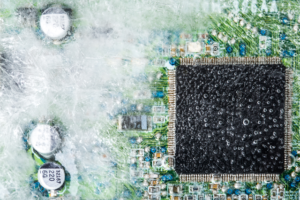
The main reason for the failure of electronic devices after long periods of inactivity is humidity. Electronic components are sensitive to moisture. When exposed to moisture, components develop corrosion that may in some cases result in short circuits. The moisture content in the air depends on the relative humidity with higher relative humidity meaning higher moisture content.

Humidity is an issue for outdoor and naval equipment, as well as for data centers and large storage facilities where humidity control is expensive.

Humidity causes fewer product failures during operation because the heat generated inside the device packaging decreases the relative humidity, reducing the amount of moisture.

There are common strategies to protect against humidity and moisture such as hermetic sealing of packages, use of desiccants, and dehumidifiers, or keeping equipment in warm stand-by.

BQR in collaboration with its customers developed a unique model to calculate the reliability of electronic equipment, accounting for the relative humidity during non-operation time. This model is part of fiXtress® BQR’s reliability and MTBF prediction software.
Frequently asked questions

Why Can Electronic Equipment Fail After a Period of Non-Operation?
Equipment reliability is typically measured by Mean Time Between Failure (MTBF) or failure probability vs. time, where time measures operation hours. When electronic equipment is not used, a user may switch the power off, expecting that next time the device is turned on, it will operate as before.
Is the failure rate really zero while equipment is switched off?
It is usually assumed to be, because reliability is measured in operating hours — but some products malfunction when turned back on after a long idle period, so the assumption does not hold.
What causes failure during storage or non-operation?
Humidity. Electronic components are sensitive to moisture, and exposure develops corrosion that can in some cases result in short circuits; the moisture content of the air rises with relative humidity.

Want this run on your design?

BQR's engineers use these tools on customer hardware every week.

Talk to an engineer

Republished from https://www.bqr.com/blog/why-can-electronic-equipment-fail-after-a-period-of-non-operation. BQR Reliability Engineering Ltd.