At BQR, we are constantly striving to enhance the workflow of safety and reliability engineers conducting safety and MTBF (Mean Time Between Failures) analyses. By collaborating closely with our customers, we have identified several time-consuming tasks that can be automated to improve efficiency.
Here are our latest software innovations designed to save time in your safety analyses:
Why does MTBF calculation come first?
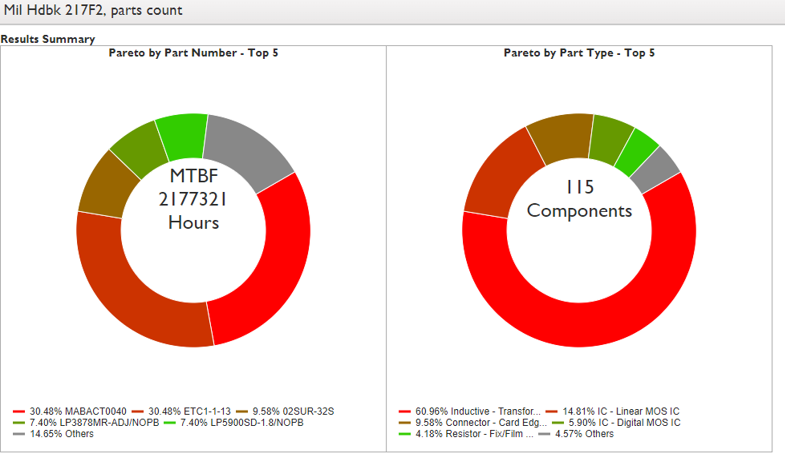
Because the failure rate (FIT rate) identifies the primary causes of product failure and is the foundation the FMECA is built on, so it has to exist before the criticality analysis can mean anything.
Calculating the failure rate (FIT rate) is essential for identifying the primary causes of product failures and serves as the foundation for FMECA (Failure Mode, Effects, and Criticality Analysis). BQR’s MTBF software simplifies this process by providing key component data with a direct link to datasheets at the click of a button. Once the component parameters are defined, they are saved in a library for easy reuse in future projects.
What makes functional FMEA/FMECA slow?
Determining the failure rate of a function means assigning components to that function, which becomes the bottleneck in a circuit with thousands of components.
To determine the failure rate of a function in an electronic circuit, components must be assigned to each function. This can be time-consuming, especially in circuits with thousands of components. BQR’s FMEA/FMECA software offers a streamlined approach, allowing users to quickly select components on the schematic and assign them to their respective functions.
How is component-level FMECA sped up?
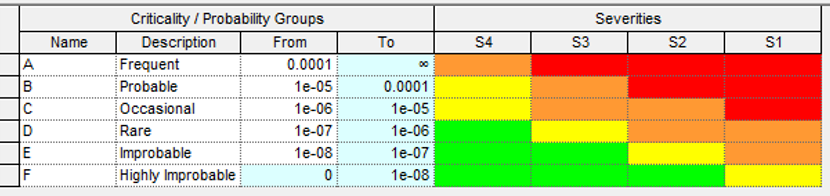
Component failure modes and their ratios can be assigned automatically from established failure mode libraries instead of entered per component.
During component-level FMECA, component failure modes and ratios can be automatically assigned from established failure mode libraries, significantly speeding up the analysis process.
What does a BIT plan have to prove?
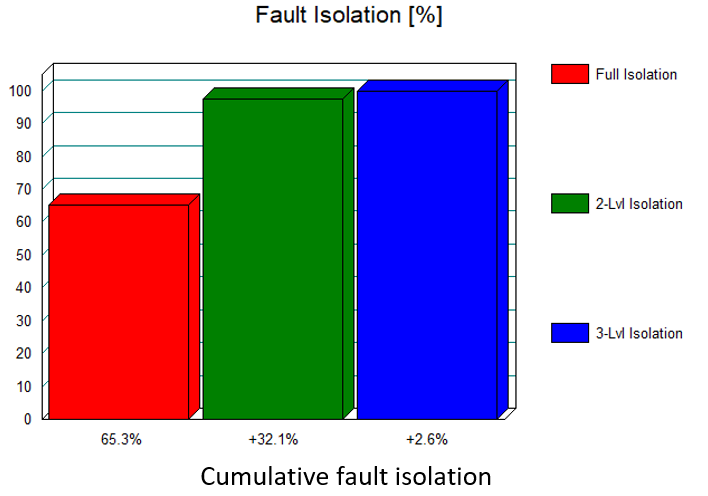
That the major failure modes are detected and that failure isolation is effective — so the analysis has to assign tests to failure modes from the FMECA, find critical functions with no test, and quantify detection and isolation effectiveness.
For mission-critical systems, designing Built-In Tests (BIT) requires ensuring that major failure modes are detected and that effective failure isolation is provided. BQR’s software facilitates quick assignment of tests to failure modes (based on FMECA), identifies critical functions that lack testing, and calculates detection and isolation effectiveness.
What has schematic review got to do with safety?
Schematic review is not traditionally treated as a safety activity, but it is where design errors that create safety risks — and deviations from best practice — are found and removed.
While schematic review is not traditionally linked to safety, it plays a critical role in identifying and eliminating design errors that may pose safety risks. BQR provides patented software for advanced schematic review, allowing users to detect design errors related to safety and reliability, as well as deviations from best practices.
Where does the time saving come from overall?
From centralising the safety-related data so each analysis feeds the next, rather than from speeding up any single analysis.
BQR’s software solutions streamline the safety analysis process, centralizing all safety-related data and significantly reducing the time required for analyses. By implementing these innovative features, engineers can enhance their product designs while ensuring compliance with safety standards.